
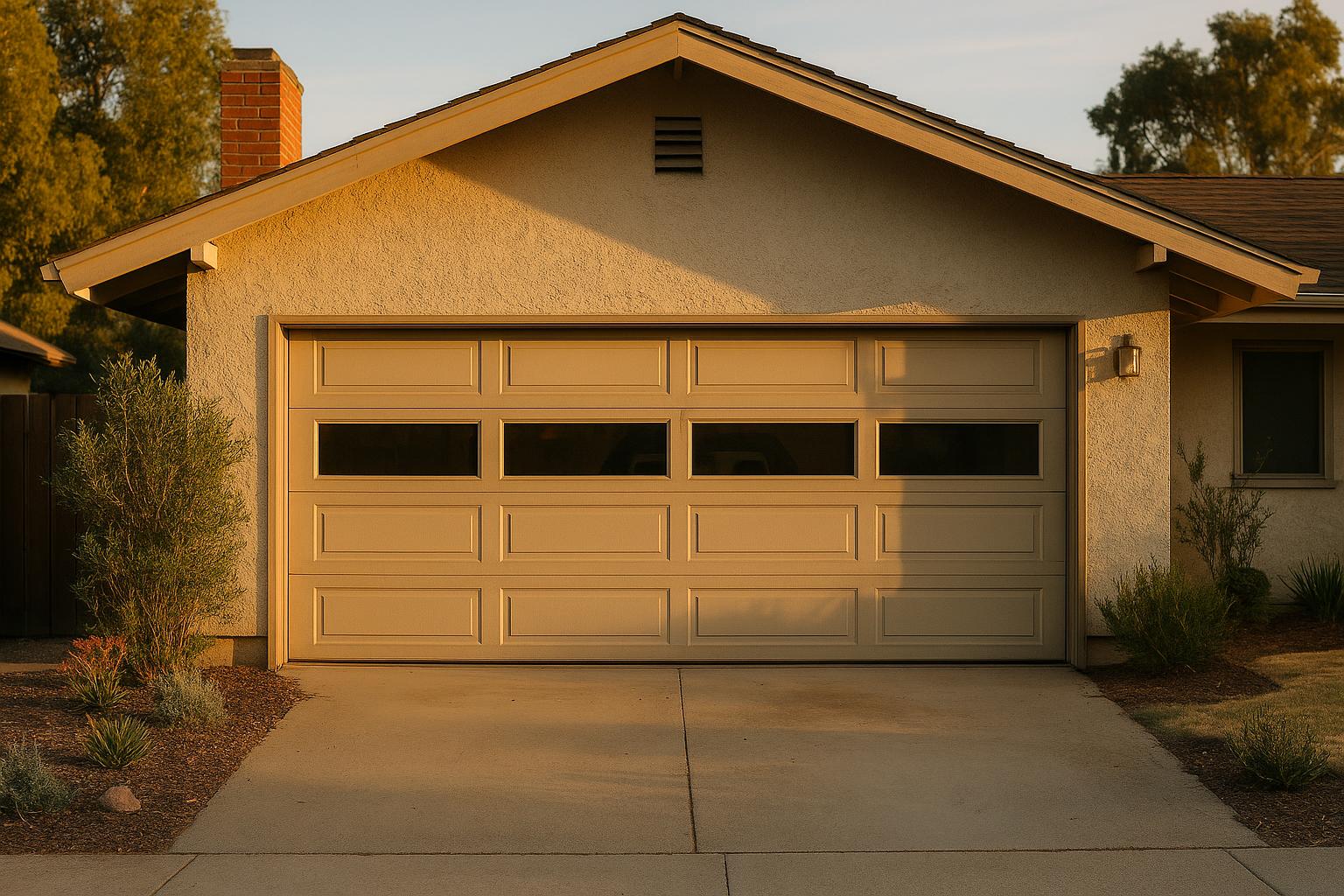
You're Running Late — and Your Garage Door Won't Budge
It's 7:15 a.m. on a Monday in Thousand Oaks. You've got your coffee, your keys, and exactly twelve minutes to make it to the office. You press the garage door opener button and… nothing. Or maybe it groans, shudders, and refuses to move. Either way, you're not going anywhere.
A garage door that won't open in the morning is one of the most common calls we get at Thousand Oaks Garage Door Works, especially during the cooler months. The good news is that the cause is usually identifiable, and sometimes you can even fix it yourself. Here's what to check and when it's time to call a professional.
1. Dead Batteries in Your Remote or Wall Button
It sounds almost too simple, but this is the number one reason garage doors seem to "stop working" overnight. Remote control batteries die gradually, and the wall-mounted button can also lose its connection if wiring loosens over time.
What to try:
- Replace the batteries in your remote — most use standard CR2032 coin cells or AA batteries.
- Try the wall-mounted button inside the garage. If the wall button works but the remote doesn't, the issue is definitely the remote.
- If neither works, the problem is likely with the opener unit itself or the power supply.
2. The Opener Is Unplugged or Has No Power
Power outages overnight — even brief ones — can trip a circuit breaker or GFCI outlet without you realizing it. This is especially common in older homes in neighborhoods like Newbury Park and Westlake Village where electrical panels may be due for an upgrade.
What to try:
- Check that the opener unit is plugged in. It's not unusual for a plug to work itself loose from vibration over time.
- Look at your electrical panel for a tripped breaker. Reset it and try again.
- If your opener is plugged into a GFCI outlet (common in garages), press the reset button on the outlet itself.
3. The Door Is Locked — Manually
Most garage doors have a manual lock mechanism — a horizontal bar that slides into the track. If someone in your household accidentally engaged it, or if it slipped into the locked position on its own, the opener motor will strain against the lock and refuse to move the door.
What to try:
- Look at the inside of your garage door for a locking handle or slide bolt.
- Make sure the lock bar is fully disengaged from the track on both sides.
- If the lock mechanism is old and sticking, a little lubricant can prevent this from happening again.
4. Cold Weather Has Affected the Components
While Thousand Oaks doesn't see harsh winters, morning temperatures in the Conejo Valley can dip into the 30s and 40s during December through February. Cold weather affects garage doors in several ways:
- Metal contracts: Tracks, springs, and rollers tighten up slightly, increasing friction.
- Lubricant thickens: Grease on the springs and tracks can become stiff, making the door harder to move.
- Weatherstripping sticks: The rubber seal at the bottom of the door can freeze or bond to the concrete floor overnight, especially if there's moisture present.
What to try:
- Gently try to break the seal at the bottom of the door by pulling the emergency release handle and lifting manually.
- Apply a silicone-based garage door lubricant to the springs, hinges, and rollers. Avoid WD-40 — it's a solvent, not a long-term lubricant.
- If the door moves manually but the opener struggles, the motor may need the force settings adjusted.
5. A Broken Spring
If you hear a loud bang from the garage overnight or your door feels impossibly heavy when you try to lift it manually, you likely have a broken torsion or extension spring. Springs bear the majority of the door's weight, and without them, even a powerful opener motor can't lift the door safely.
What to do:
- Do not attempt to open the door — manually or with the opener. Operating a door with a broken spring puts extreme stress on the opener and can cause the door to fall unexpectedly.
- Look above the door for the torsion spring. If you see a visible gap or a spring that looks separated, that confirms the break.
- Call a professional. Spring replacement involves high-tension hardware that can cause serious injury if handled incorrectly.
6. The Safety Sensors Are Misaligned or Blocked
Every garage door opener manufactured after 1993 has photoelectric safety sensors near the bottom of the door tracks. If these sensors are bumped, dirty, or misaligned, the door may close partially and reverse — but in some cases, the opener will also refuse to operate at all, especially if the sensor wiring has been damaged.
What to try:
- Check that both sensors have a steady light (usually green on one and amber on the other). A blinking light typically means misalignment.
- Wipe the sensor lenses with a soft cloth — dust, cobwebs, and condensation can block the beam.
- Make sure nothing is sitting in front of the sensors, like a trash can, bike, or storage box.
7. The Trolley Is Disconnected
If you or someone in your household pulled the emergency release cord — the red handle hanging from the opener rail — the trolley that connects the opener to the door disengages. This is designed to let you operate the door manually during a power outage, but if it's left disconnected, the opener motor will run without moving the door.
What to try:
- Pull the emergency release cord toward the opener (not away from it) to re-engage the trolley.
- Press the opener button — the trolley should reconnect automatically as the chain or belt moves.
When to Call a Professional
If you've worked through the list above and your garage door still won't open, the issue likely involves the opener motor, the main circuit board, worn-out gears, or a structural problem with the door itself. These are repairs that require proper tools, replacement parts, and experience to handle safely.
At Thousand Oaks Garage Door Works, we offer same-day service throughout Thousand Oaks, Agoura Hills, Oak Park, and Camarillo. We know that a garage door that won't open isn't just an inconvenience — it can leave your car trapped and your home less secure. That's why we prioritize morning calls and aim to get your door working again as quickly as possible.
A Quick Prevention Tip
Most morning garage door failures are preventable with basic annual maintenance. A professional tune-up includes lubricating all moving parts, testing the balance and force settings, inspecting springs for wear, and making sure the safety sensors and opener are functioning properly. Think of it like an oil change for your garage door — a small investment that prevents expensive surprises.
If your garage door gave you trouble this morning, or if you want to make sure it doesn't, give us a call. We're happy to take a look and give you an honest assessment — no pressure, no upsells, just straightforward garage door service from a local team that knows the Conejo Valley.