
What Skipping This Costs You
A garage door that goes untouched for a year doesn't fail quietly. It fails at the worst possible moment — a spring snaps when the door is halfway down, an opener motor burns out trying to force a door that's been binding for months, or a track finally gives way after being nudged out of alignment by a slow-leaking roller. None of these are sudden problems. They're slow ones that a twenty-minute seasonal check would have caught while they were still cheap to fix.
The math is simple: a worn roller or a dry hinge costs a few dollars and a few minutes to address. The same part ignored for another season can take out a cable, warp a track, or strain an opener gear assembly — turning a minor fix into a repair bill in the hundreds, sometimes requiring a full spring or opener replacement. Dust from dry summer and fall months, the grit that rides in on wildfire smoke, and the first heavy winter rains all accelerate wear on hardware that would otherwise last for years. A quick seasonal pass is cheap insurance against all of it.
Tools You'll Need
- A flashlight or phone light
- A step stool or short ladder
- A rag and a stiff brush (an old toothbrush works)
- Silicone-based garage door lubricant (not WD-40, which attracts dust)
- A socket wrench or screwdriver for checking (not tightening) hardware
- A tape measure
The Twenty-Minute Routine, Step by Step
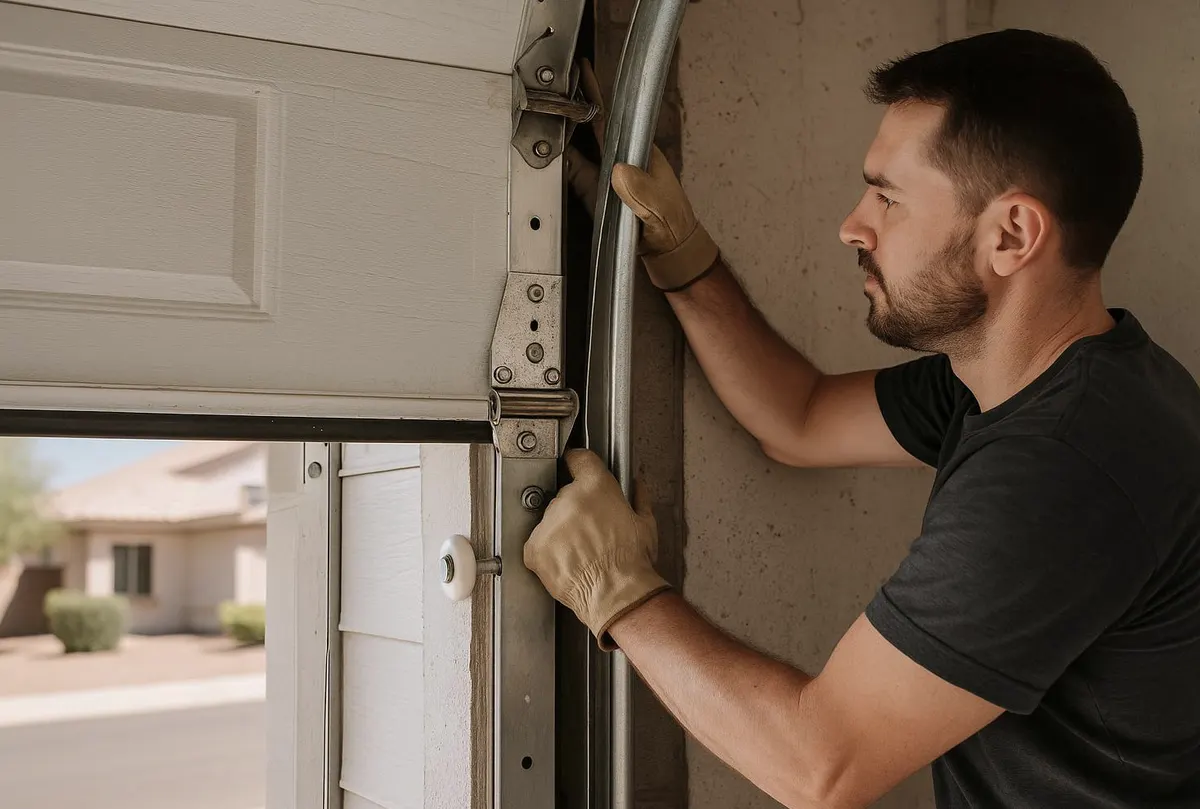
- Look at the tracks. With the door closed, run your flashlight along both vertical tracks. You're checking for dents, rust spots, or debris buildup — especially grit that's settled in during dry, dusty months. Wipe tracks clean with a rag; don't lubricate the tracks themselves.
- Check the rollers. Watch the rollers as the door opens and closes. They should roll smoothly, not grind, wobble, or hang up. A roller that looks cracked, flat on one side, or visibly loose is worth noting, but don't attempt to remove or replace one yourself.
- Lubricate the moving metal parts. Hinges, roller stems, and the opener's chain or screw drive all benefit from a light coat of silicone lubricant once a season. Skip the springs entirely — more on that below.
- Test the auto-reverse safety feature. Place a block of wood (a 2x4 works well) flat on the ground where the door closes. Close the door and confirm it reverses on contact. Then test the photo-eye sensors by waving a hand or broom through the beam while the door is closing — it should stop and reverse immediately.
- Inspect the weatherstripping. Check the rubber seal along the bottom of the door and look for cracking, gaps, or sections pulling away. Winter rain will find any gap here, and a brittle seal from a dry summer is a common culprit.
- Check the balance. Disconnect the opener (pull the manual release cord) and lift the door halfway by hand. It should stay in place on its own. If it drifts up or crashes down, the spring tension is off — this is a technician job, not a DIY fix.
- Tighten visible hardware. Brackets, hinges, and track bolts can work loose from regular vibration and, in this area, from minor seismic activity over time. Snug anything that's visibly loose with a wrench, but don't force anything that feels seized or stripped.
- Clear the sensor eyes and clean the exterior. Wipe down the photo-eye lenses and give the exterior panels a rinse if they're coastal-adjacent and carrying salt residue, or dusty from an inland dry spell. A clean door seals better and shows wear sooner.
Where the Line Is: DIY vs. Technician
Everything above — lubrication, visual inspection, cleaning, testing auto-reverse — is safe and appropriate for a homeowner. What's not: adjusting spring tension, replacing cables, realigning bent tracks, or working on anything under active tension. Garage door springs store enormous force, and even experienced DIYers get hurt attempting adjustments. If step 6 shows your door is out of balance, or you notice fraying cables, a track that's visibly bent, or an opener that strains and reverses on its own, stop there and call it in.
When to Call Thousand Oaks Garage Door Works
If your seasonal check turns up an unbalanced door, a cracked roller, a spring that looks stretched or has a visible gap in its coils, or weatherstripping too far gone to just patch, that's the point to call a technician rather than push further. Our Garage Door Maintenance visits cover a full tune-up — spring tension checks, hardware torque, track alignment, and opener calibration — the parts of this routine that go beyond what's safe to handle with a wrench from a step stool. And if a spring has already let go or the door won't move at all, our Emergency Garage Door Service gets a technician out fast rather than leaving your home or business exposed with a door stuck open or shut.
If you're due for your seasonal check and want it done right the first time, Thousand Oaks Garage Door Works serves homeowners across Thousand Oaks, Newbury Park, Westlake Village, Agoura Hills, Oak Park, Camarillo, Moorpark, and Simi Valley. Call us today to get your garage door ready for the season ahead.