
Your garage door is almost certainly the weakest structural point on your house, and a few dry, windy weeks followed by a hard winter rain is exactly when that weakness shows up. The fix isn't complicated: tighten the hardware, check the balance, add bracing if your door doesn't have it, and know where your manual release is before the power goes out.
Why the Garage Door Is the Weakest Wall
Every other wall in your home is a solid, continuous structure tied into the framing. Your garage door is a large panel of thin steel or wood, hung on tracks, held up by springs, and braced only by whatever reinforcement was built in at the factory. When wind hits a closed garage door, it pushes on more square footage than almost any other single surface on the house. If the door buckles or blows in, wind pressure suddenly has a way into the building, and that pressure pushes up on the roof from the inside. This is the same failure mode inspectors talk about in hurricane zones, and while Thousand Oaks doesn't get hurricanes, it does get Santa Ana wind events strong enough to rattle a poorly maintained door right off its tracks.
What This Season Actually Brings to the Conejo Valley
October through winter is when the area flips from dry heat and wildfire-season dust to the first real storms of the year. That transition brings two separate stresses on a garage door. First, the Santa Ana winds that kick up in fall can hit homes with sustained gusts strong enough to flex a door that's already a little loose on its rollers. Second, the first heavy rains after a dry summer often reveal weatherstripping that's cracked, shrunk, or pulled away from the frame, letting water track across the garage floor and sometimes reach stored items or an unprotected electrical panel.
Pre-Storm Inspection Checklist
- Track alignment: Stand back and look for gaps between the rollers and the track, or a track that's pulled away from the wall bracket. Wind-driven flex makes existing misalignment worse fast.
- Hardware tightness: Hinges, roller brackets, and track bolts loosen over time from everyday vibration. A wrench pass on all visible bolts takes fifteen minutes and removes a lot of wind-related play.
- Weatherstripping: Check the rubber seal along the bottom and sides for cracking, gaps, or sections that have come loose. This is your main defense against driving rain getting under the door.
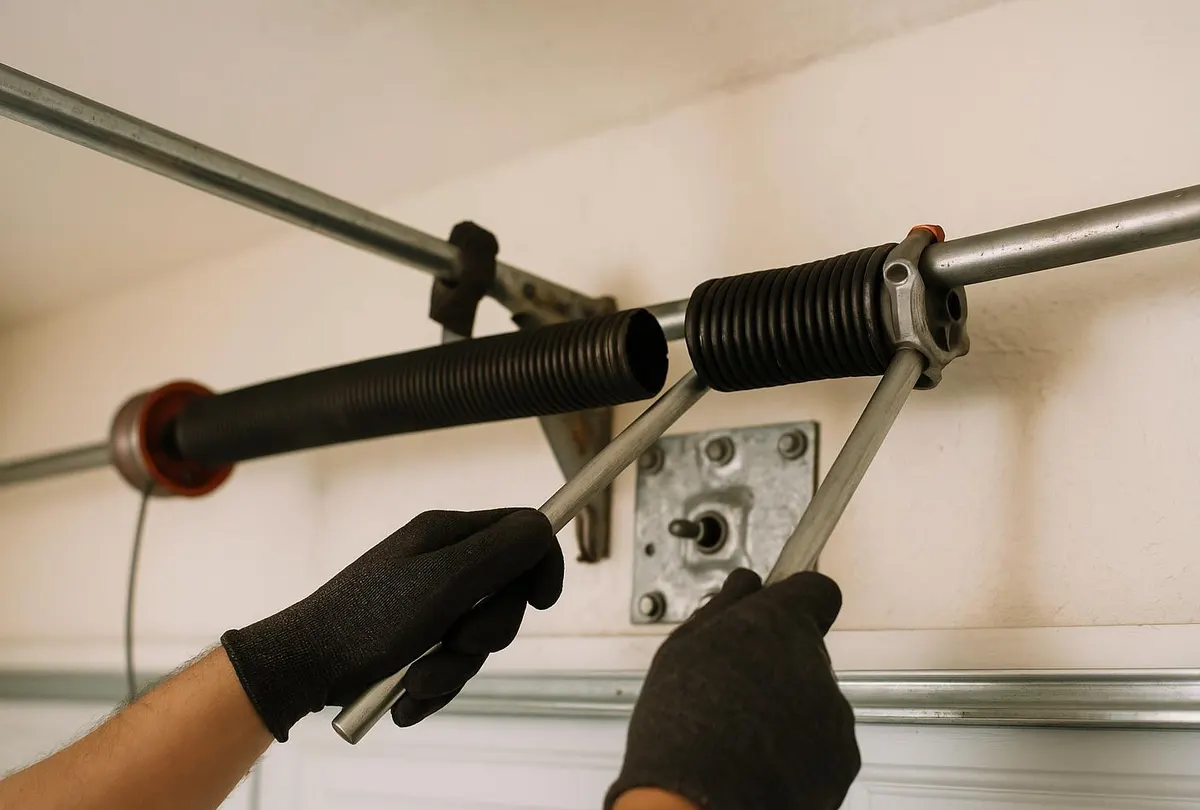
- Balance test: Disconnect the opener, lift the door halfway by hand, and let go. It should hold position. If it drifts up or crashes down, the springs are carrying uneven tension, which is also when a door is most likely to fail under wind load.
- Battery backup: If your opener has a battery backup, confirm it holds a charge. Winter storms here come with power blips, and you don't want to be stuck manually hauling a heavy door at 11pm in the rain.
- Seismic retrofit hardware: If your garage was built or retrofitted with earthquake bracing, make sure it hasn't been bumped loose or corroded, since the same bracing that helps in a quake also stiffens the door against wind.
Reinforcing the Door Itself
If your garage faces the direction prevailing winds usually come from, or you've had a panel flex visibly in past wind events, a horizontal strut kit adds real stiffness across the width of the door for a modest cost. Heavier-gauge steel doors and reinforced panel designs hold up better than thin aluminum or older wood doors, and this is worth factoring in if you're due for a replacement anyway rather than repairing an aging door year after year. During an active wind warning, keeping the door fully closed and, if your opener allows it, engaging the manual lock bar reduces the chance of wind working the door loose from the inside.
After the Storm
Once the wind and rain pass, walk the door again. Look for water stains along the bottom seal, check that the opener still reverses correctly on contact, and listen for new grinding or scraping sounds that weren't there before, which usually mean debris worked into the track.
When to Call Thousand Oaks Garage Door Works
If your door is already drifting out of balance, the weatherstripping is too far gone to seal properly, or you hear new noise after a windy night, that's the point to call rather than wait. We handle garage door maintenance visits that cover the full tightening and balance check above, and if a storm catches you off guard with a door that won't close or has come off track, our emergency garage door service gets a technician out fast rather than leaving your home open to the weather overnight.
If you're in Thousand Oaks, Newbury Park, Westlake Village, Agoura Hills, Oak Park, Camarillo, Moorpark, or Simi Valley and want your garage door checked before the next storm rolls through, call Thousand Oaks Garage Door Works today.