
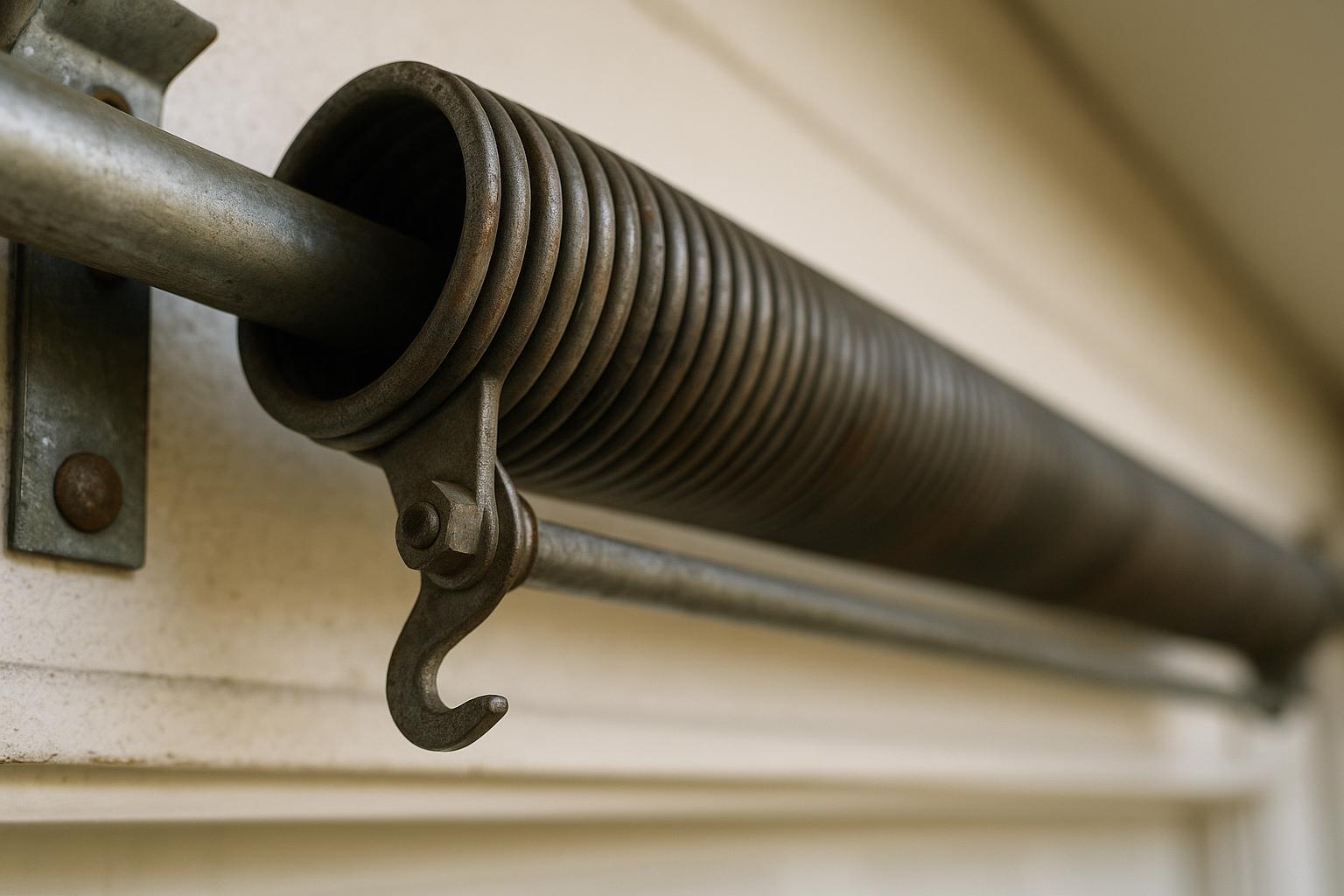
Your Garage Door Springs Are Trying to Tell You Something
If you've ever had a garage door spring break, you know the sound — a loud bang that echoes through the house like a gunshot. It's startling, and it leaves your garage door completely inoperable. But here's the thing most Thousand Oaks homeowners don't realize: garage door springs almost never fail without warning. There are clear signs that a spring is nearing the end of its life, and catching them early can save you from an inconvenient — and potentially dangerous — situation.
Garage door springs carry an enormous amount of tension. They're responsible for counterbalancing the full weight of your door, which can be anywhere from 130 to 400 pounds depending on the material and size. When they break, the door becomes dead weight. Understanding what to look for can help you schedule a replacement on your terms instead of dealing with an emergency.
How Long Do Garage Door Springs Last?
Most standard torsion springs are rated for approximately 10,000 cycles. One cycle equals one full open and one full close. If your household opens and closes the garage door four times a day, that's roughly 1,460 cycles per year — which means your springs have a lifespan of about seven years.
High-cycle springs, rated for 25,000 or even 50,000 cycles, last significantly longer but cost more upfront. If you're replacing springs and plan to stay in your home for a while, upgrading to high-cycle springs is worth discussing with your technician.
7 Warning Signs Your Springs Are Failing
1. The Door Feels Heavier Than Usual
Try this simple test: pull the emergency release cord to disconnect the opener, then manually lift the door about halfway. A properly balanced door should stay in place on its own. If it feels unusually heavy or slides back down, your springs are losing tension and struggling to support the door's weight.
2. The Door Opens Slowly or Unevenly
When springs weaken, your garage door opener has to work harder to lift the door. You might notice the door rising more slowly than it used to, or one side lifting before the other. This uneven movement puts extra stress on your opener motor and can lead to a second, more expensive repair if left unchecked.
3. Visible Gaps in the Spring Coils
Take a look at the torsion spring mounted above your garage door. A healthy spring has tightly wound coils with uniform spacing. If you notice a visible gap or separation between coils — especially near the center — the spring is stretched and weakened. This is one of the most reliable visual indicators that failure is imminent.
4. The Door Slams Shut Quickly
Springs control the speed at which your door closes. When they lose tension, gravity takes over and the door drops faster than it should. This is a safety concern, especially in homes with children or pets. If your door seems to be closing with more force than normal, don't ignore it.
5. Rust on the Spring Coils
Rust is a spring killer. It increases friction between the coils as they expand and contract, which accelerates wear. It also weakens the metal itself, making the spring more brittle and prone to snapping. In the Thousand Oaks area, our relatively mild climate helps, but moisture and temperature swings can still cause corrosion over time. Applying a light lubricant to your springs a few times a year can extend their life.
6. Loud Creaking or Squealing Noises
Some noise during operation is normal, but loud creaking, popping, or squealing sounds when the door moves are red flags. These noises often indicate that the spring metal is fatiguing or that the coils are binding due to wear or rust. Don't just turn up the radio — get it inspected.
7. Your Springs Are More Than 7 Years Old
Even if everything seems fine, age alone is a reliable predictor. If your springs are approaching or past the seven-year mark and you're still on the original set, it's smart to have them inspected by a professional. Many homeowners in Newbury Park and Westlake Village call us for a quick assessment just to get peace of mind.
Can You Replace Garage Door Springs Yourself?
We strongly advise against it. Garage door spring replacement is one of the most dangerous DIY home repairs you can attempt. Torsion springs are under extreme tension, and improper handling can result in serious injury or even death. Every year, thousands of people across the country are injured attempting this repair without proper tools and training.
A qualified technician has the winding bars, experience, and safety knowledge to replace springs quickly and correctly. The job typically takes less than an hour, and the cost is modest compared to the risk of doing it yourself.
Should You Replace One Spring or Both?
If your garage door has two torsion springs — which most double-car doors in Thousand Oaks do — we almost always recommend replacing both at the same time, even if only one has broken. Here's why:
- Both springs are the same age. If one has failed, the other is likely close behind.
- Balanced tension matters. A new spring paired with a worn spring creates uneven force on the door, leading to premature wear on tracks, cables, and the opener.
- You save on labor. The labor involved in replacing one spring versus two is nearly identical, so doing both at once is more cost-effective.
What to Do If a Spring Breaks
If your spring has already snapped, here's what to do:
- Don't try to open the door. Operating your garage door with a broken spring puts extreme strain on the opener and can damage cables, drums, or the door itself.
- Disconnect the opener. Pull the emergency release handle to prevent anyone from accidentally activating the door with a remote.
- Call a professional. Most reputable garage door companies — including ours — can get to you the same day. We offer emergency service throughout Thousand Oaks, Agoura Hills, Oak Park, and Camarillo for exactly these situations.
Prevention Is Always Cheaper Than Repair
The best way to avoid a surprise spring failure is to pay attention to how your garage door looks, sounds, and feels during everyday use. Small changes in performance are your early warning system. And if something seems off, a quick inspection from a trained technician can identify the problem before it turns into a breakdown.
At Thousand Oaks Garage Door Works, we've seen every stage of spring wear — from the first signs of fatigue to the dramatic snap that leaves homeowners stranded. If your springs are showing any of the signs we've covered here, give us a call. We'll take a look, give you an honest assessment, and help you decide on the right fix — no pressure, no upselling.