
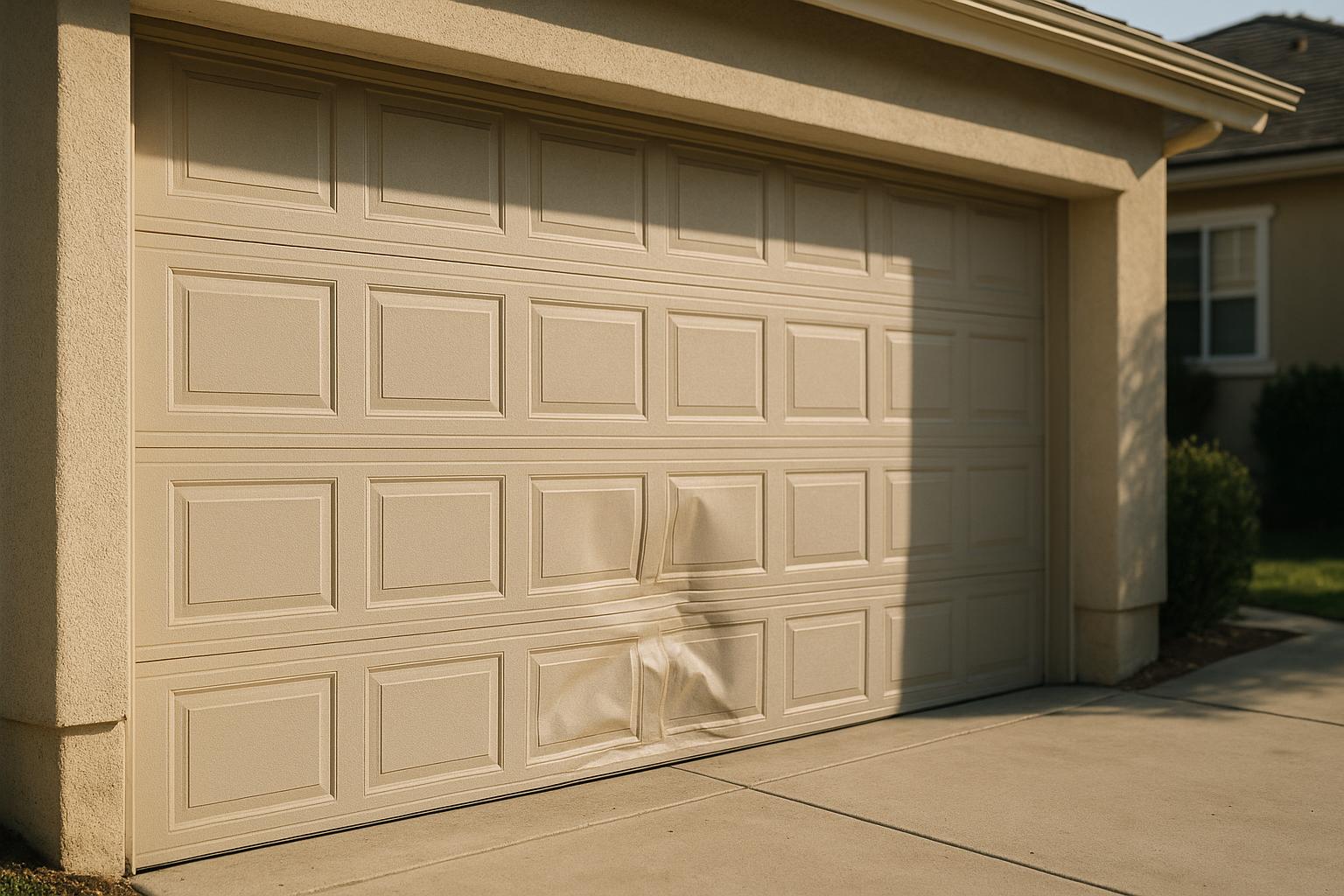
That One Damaged Panel Is Driving You Crazy
Maybe a car bumped into it while backing out. Maybe a basketball finally won the battle. Or maybe years of Thousand Oaks sun and Santa Ana winds have warped or cracked just one section of your garage door. Whatever happened, you're staring at a single damaged panel and wondering: do I really need to replace the entire door?
It's one of the most common questions we get from homeowners across the Conejo Valley, and the answer isn't always straightforward. Sometimes a single panel replacement is the smart, cost-effective move. Other times, replacing the whole door actually saves you money in the long run. Let's break down how to figure out which option is right for your situation.
When Replacing a Single Panel Makes Sense
Panel replacement is often the better choice when the damage is isolated and the rest of your garage door is in solid shape. Here are the scenarios where swapping out one panel is usually the way to go:
- The damage is cosmetic or minor structural. A dent, crack, or small hole in one panel — while the rest of the door operates smoothly — is a textbook case for panel replacement.
- Your door is relatively new. If your garage door is less than 10 years old, the panels are likely still available from the manufacturer, and the rest of the door has plenty of life left.
- The panel is still in production. This is the big one. If the manufacturer still makes your specific panel style, size, and color, a replacement panel can be ordered and installed to match seamlessly.
- Your budget is tight. A single panel typically costs a fraction of a full door replacement, making it an attractive option when finances are a concern.
When everything lines up, a panel replacement can have your garage door looking and functioning like new in a single service visit.
When a Full Door Replacement Is the Better Investment
There are plenty of situations where replacing just one panel sounds appealing but doesn't actually make financial or practical sense. Here's when you should seriously consider a full garage door replacement instead:
- Your panel has been discontinued. Garage door manufacturers regularly update their product lines. If your door is 15 or 20 years old, there's a good chance the exact panel is no longer available. A mismatched panel will stand out and can even affect how the door operates.
- Multiple panels are damaged. If two or more panels need replacing, the cost starts approaching — or even exceeding — the price of a brand-new door. At that point, you're better off investing in a complete replacement.
- The door has underlying issues. Damaged panels are sometimes a symptom of bigger problems. If your tracks are misaligned, your springs are worn, or the door has been sagging, a new panel won't fix the root cause.
- You want to upgrade. An older door with poor insulation, outdated styling, or no smart opener compatibility might be holding your home back. A full replacement lets you upgrade to a modern, energy-efficient, and better-looking door.
- You're planning to sell your home. A new garage door consistently ranks as one of the highest-ROI home improvement projects. If you're getting ready to list your Thousand Oaks home, a full replacement can boost curb appeal and resale value far more than a patched panel.
The Hidden Factor: Panel Availability
This deserves its own section because it catches so many homeowners off guard. Garage door panels are not universal. They vary by manufacturer, model, size, color, insulation type, and even the year they were produced. Even if a panel looks similar, slight differences in dimensions or tongue-and-groove connections can prevent it from fitting properly.
Before committing to a panel replacement, a qualified technician needs to identify your door's manufacturer and model number, then verify whether that specific panel is still available. At Thousand Oaks Garage Door Works, this is one of the first things we check during an inspection so you're not waiting weeks only to find out the part doesn't exist anymore.
What If You Can't Find an Exact Match?
If your exact panel is discontinued, you generally have three options:
- Check for compatible aftermarket panels. Some third-party manufacturers produce panels designed to fit popular older models. The match isn't always perfect, but it can be close enough.
- Replace the bottom two panels. If only the bottom panel is damaged and an exact match isn't available, some homeowners choose to replace the bottom two sections with a complementary style, creating an intentional two-tone look.
- Replace the entire door. When no reasonable match exists, a full replacement is the cleanest solution.
Cost Comparison: What to Expect
Every situation is different, but here are some general ballpark figures to help you plan:
- Single panel replacement: Typically ranges from $250 to $800, depending on the panel material, size, and whether it's insulated. Labor is usually included.
- Full garage door replacement: A standard single-car door installation generally starts around $1,000 to $1,500, while a double-car door with insulation and upgraded hardware can range from $1,800 to $3,500 or more.
Keep in mind that these are general ranges. The actual cost depends on your specific door, the materials you choose, and any additional repairs needed. We always provide a clear, upfront estimate before any work begins — no surprises.
How to Assess the Damage Yourself
Before calling a professional, you can do a quick self-assessment to get a sense of what you're dealing with:
- Inspect the damaged panel from inside and outside. Look for cracks that go all the way through, bowing, or separation at the joints.
- Check the surrounding panels. Run your hand along adjacent sections. Are they warped, rusty, or showing signs of wear?
- Test the door's operation. Open and close the door a few times. Does it move smoothly, or does it hesitate, bind, or make unusual noises?
- Look for the manufacturer's label. There's usually a sticker on the inside of the door or along the edge of a panel with the brand, model number, and sometimes the date of manufacture. This information is critical for ordering a replacement panel.
If anything feels off beyond the obvious damage, it's worth having a technician take a closer look. What seems like a simple panel issue can sometimes reveal worn-out hardware or balance problems that need attention.
Let Us Help You Make the Right Call
Whether you need a single panel swapped out or you're ready for a completely new garage door, the most important step is getting an honest assessment from someone who knows what they're looking at. At Thousand Oaks Garage Door Works, we serve homeowners throughout Thousand Oaks, Newbury Park, Westlake Village, Agoura Hills, Oak Park, and Camarillo with straightforward advice and fair pricing.
We'll inspect your door, check panel availability, and walk you through your options so you can make a confident decision — not a pressured one. Give us a call or request a free estimate online, and we'll help you figure out the smartest path forward for your garage door.