
That Loud Garage Door Isn't Just a Nuisance
If your garage door has started sounding like a freight train every time you open or close it, you're not alone. Noisy garage doors are one of the most common complaints we hear from homeowners across Thousand Oaks and the Conejo Valley. And while it's tempting to just crank up the TV and ignore it, those sounds are usually trying to tell you something.
A garage door system has dozens of moving parts — springs, rollers, hinges, tracks, cables, and an opener — and when any of them start to wear out, they get loud about it. The good news is that most garage door noises have straightforward causes and fixes. The key is knowing what you're hearing and acting before a minor annoyance turns into a major repair.
Common Garage Door Noises and What They Mean
Not all garage door sounds are created equal. The type of noise you're hearing can point directly to the problem. Here's a breakdown of the most common culprits.
Squealing or Squeaking
A high-pitched squeal when your garage door moves is almost always a lubrication issue. Metal rollers, hinges, and springs need periodic lubrication to operate smoothly. Over time, the factory lubricant dries out, and metal-on-metal contact creates that unmistakable screech.
This is especially common in Thousand Oaks during the drier months when dust and heat accelerate wear on moving parts. A proper application of garage door-specific lubricant — not WD-40, which is a solvent, not a lubricant — can often solve the problem immediately.
Grinding or Scraping
A grinding sound usually means something is rubbing where it shouldn't be. The most common causes include:
- Worn-out rollers that no longer spin freely inside the track
- Misaligned tracks that force the door to scrape against the metal as it moves
- Bent track sections from an impact or gradual shifting over time
If you hear grinding, take a close look at your rollers and tracks. You may notice visible wear marks, metal shavings, or spots where the door seems to catch as it travels up or down.
Rattling or Vibrating
Rattling is often the easiest noise to fix. It typically comes from loose hardware — nuts, bolts, and brackets that have vibrated loose over months or years of daily use. A socket wrench and fifteen minutes can sometimes eliminate the noise entirely.
However, rattling can also come from a loose chain on a chain-drive garage door opener. If the chain has too much slack, it slaps against the rail and creates a noticeable rattle every time the door operates.
Banging or Popping
A loud bang or pop when your garage door moves is more concerning. This can indicate:
- Torsion spring issues — springs that are binding or under uneven tension
- Panel problems — sections that are flexing or shifting as the door moves
- Opener bracket stress — the connection point between the opener arm and the door taking excessive force
Banging sounds warrant a professional inspection. Spring and tension issues in particular can be dangerous to diagnose or repair on your own.
Humming or Buzzing from the Opener
If the noise is coming from the ceiling-mounted opener unit rather than the door itself, you may be dealing with a motor issue or a failing gear set inside the opener. Opener motors work hard — especially on heavier wooden or insulated doors common in Newbury Park and Westlake Village homes — and internal gears can strip or wear over time.
A humming opener that struggles to move the door is often on its last legs and may need repair or replacement before it fails completely.
Quick Fixes You Can Try Yourself
Before calling a professional, there are a few safe steps you can take to address a noisy garage door:
- Lubricate all moving parts. Apply a silicone-based or lithium-based garage door lubricant to the rollers, hinges, springs, and bearing plates. Avoid petroleum-based products that attract dirt and gum up over time.
- Tighten the hardware. Go over every visible nut, bolt, and bracket with a socket wrench. Pay special attention to the track brackets, hinge bolts, and the opener mounting hardware.
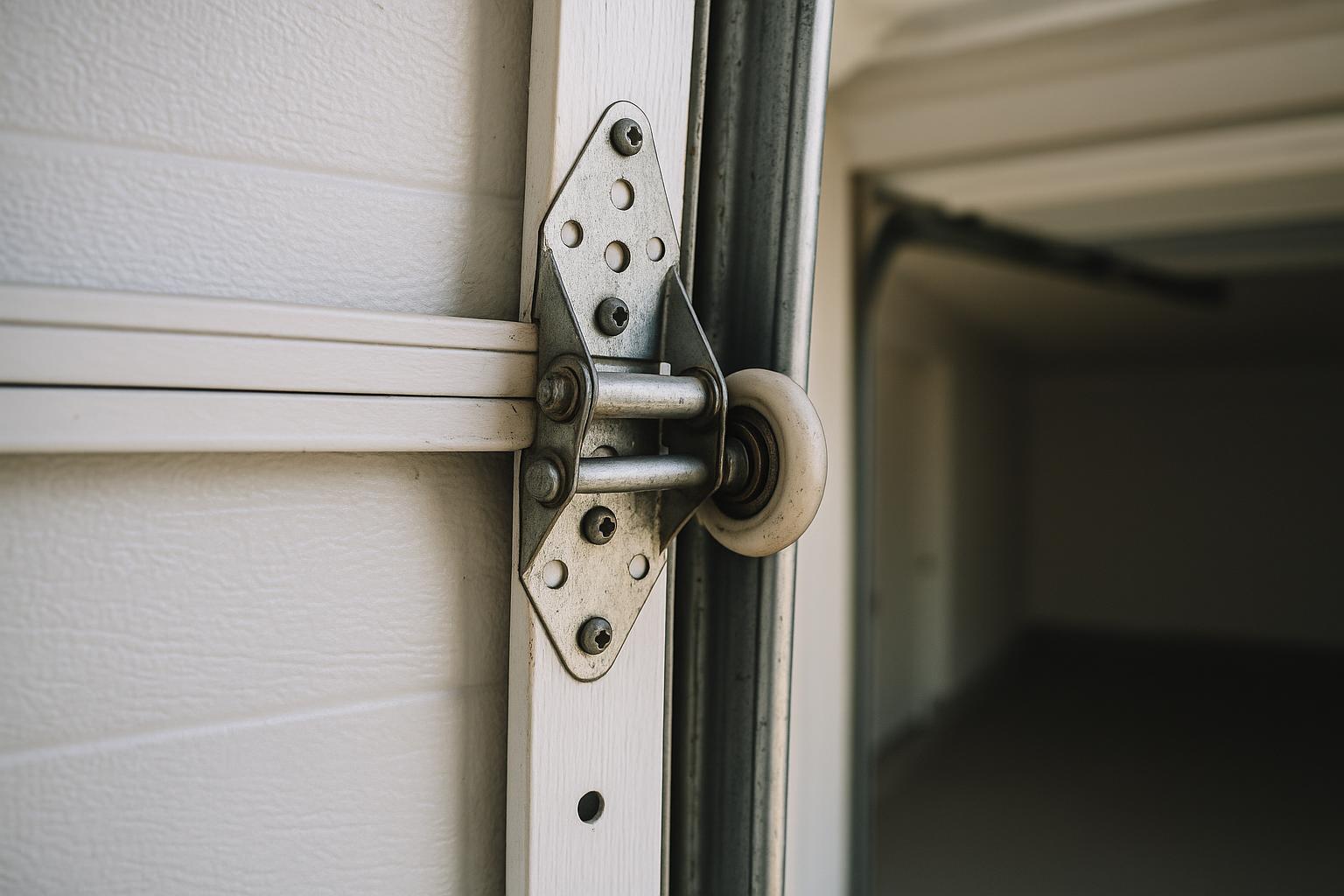
- Inspect the rollers. If your door uses metal rollers, check them for flat spots, cracks, or excessive wobble. Worn rollers are a top noise source and are relatively inexpensive to replace.
- Check the chain or belt tension. If you have a chain-drive opener, consult your owner's manual for the correct chain tension. A belt-drive opener is inherently quieter, but a worn belt can also create noise.
When to Upgrade to Nylon Rollers
One of the most effective upgrades for a noisy garage door is switching from standard steel rollers to nylon rollers. Steel rollers are durable but loud, especially as they age. Nylon rollers operate significantly quieter, don't require lubrication, and last longer in most residential applications.
This is a popular upgrade we do for homeowners in Agoura Hills and Oak Park who have bedrooms above or adjacent to their garages. The difference in noise level is dramatic — many customers tell us it sounds like a completely different door.
When to Call a Professional
Some garage door noises point to problems that aren't safe or practical to fix on your own. You should call a professional if:
- The noise involves the torsion springs — these are under extreme tension and can cause serious injury
- Your tracks are visibly bent or misaligned and the door isn't traveling smoothly
- The opener motor is straining or making internal grinding sounds
- You've lubricated and tightened everything but the noise persists or gets worse
- The door is shaking, jerking, or moving unevenly as it operates
These symptoms can indicate problems that will only get worse with time. A small repair now can prevent a much more expensive breakdown later.
Don't Ignore the Noise
A noisy garage door is more than an inconvenience — it's a signal. Every squeak, grind, and rattle is a clue about the condition of your door system. Addressing these sounds early keeps your door operating safely, extends the life of your components, and saves you money on emergency repairs down the road.
If your garage door has been getting louder and the DIY fixes aren't cutting it, Thousand Oaks Garage Door Works can diagnose the issue and get things running quietly again. We serve homeowners throughout Thousand Oaks, Newbury Park, Westlake Village, Agoura Hills, Oak Park, and Camarillo with honest assessments and fair pricing — no upselling, no surprises.