
Your Garage Door Is the Most-Used Moving Part of Your Home
Think about how many times you open and close your garage door each day. For most families in Thousand Oaks, it's at least four times — morning departures, afternoon returns, taking the kids to school, running errands. That adds up to roughly 1,500 cycles per year. Every single one of those cycles puts stress on springs, cables, rollers, hinges, and the opener itself.
Despite all that use, garage door maintenance is one of the most overlooked home tasks. Most homeowners don't give their garage door a second thought until it starts making strange noises, moves unevenly, or stops working altogether. By that point, a simple maintenance issue has often turned into an expensive repair.
So how often should you actually service your garage door? And what does a proper tune-up involve? Let's break it down.
The Short Answer: At Least Once a Year
At a minimum, your garage door should receive a professional inspection and tune-up once a year. Think of it the same way you think about your HVAC system or your car — regular maintenance prevents costly breakdowns and extends the life of the equipment.
If your garage door gets heavier-than-average use — maybe you have multiple drivers in the household, use the garage as a workshop, or operate a home business — you may benefit from servicing it every six months.
Seasonal Timing That Works Best
Many of our customers in the Conejo Valley schedule their annual garage door service in the spring or early fall. The mild weather in Thousand Oaks means we don't deal with the extreme temperature swings that other parts of the country face, but seasonal check-ups still make sense. Spring is a great time to address any wear that accumulated over the wetter winter months, and fall service ensures everything is in top shape heading into the holidays when your garage door sees even more use.
What a Professional Garage Door Tune-Up Includes
A proper garage door maintenance visit isn't just a quick visual inspection. Here's what a thorough service appointment should cover:
1. Spring Inspection and Adjustment
Your garage door springs do the heavy lifting — literally. They bear the full weight of the door every time it opens and closes. During a tune-up, a technician will inspect the springs for signs of wear, rust, or fatigue. If the door's balance is off, they'll adjust the spring tension so the opener doesn't have to work harder than it should.
Important: Never attempt to adjust or replace garage door springs yourself. They are under extreme tension and can cause serious injury if handled improperly.
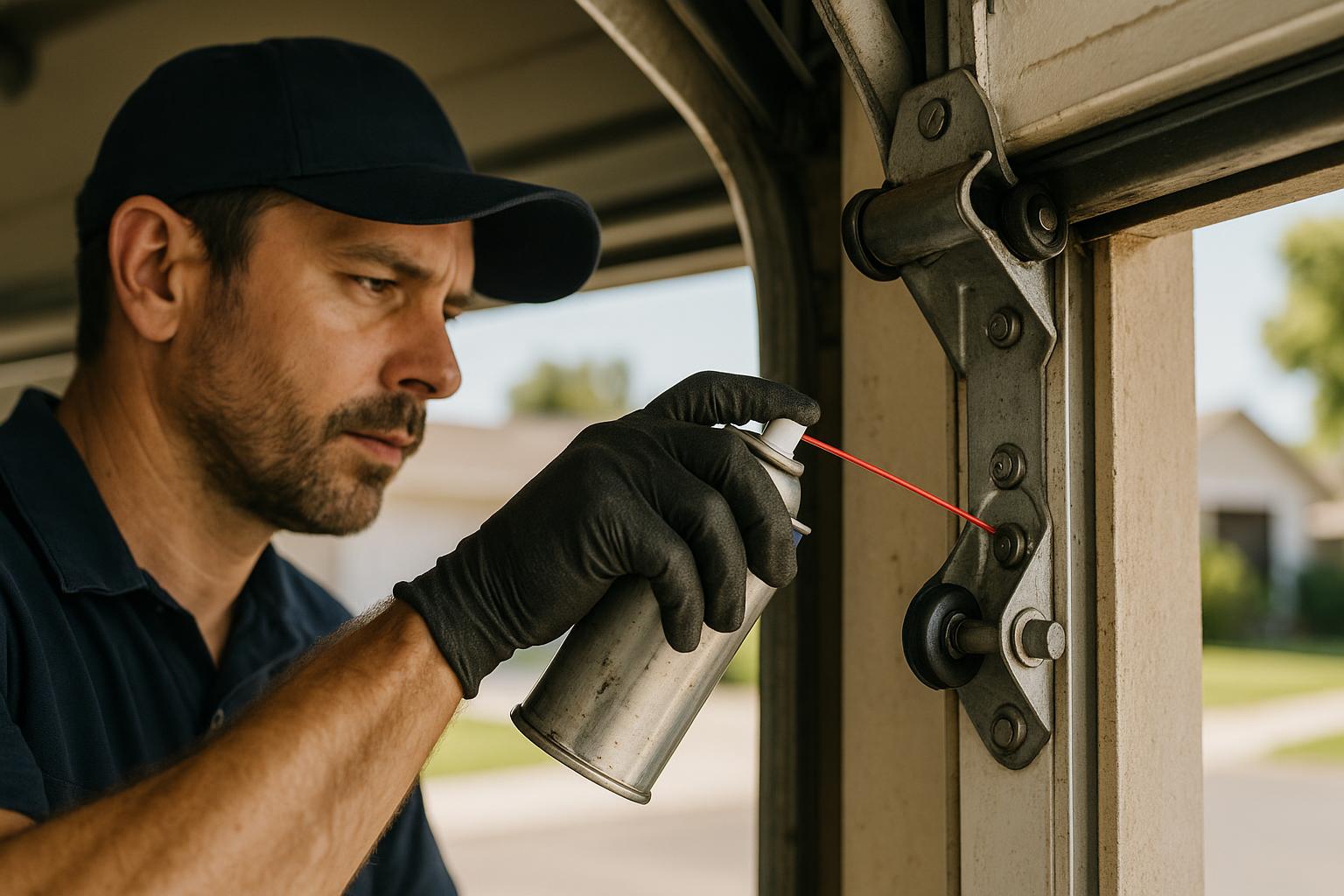
2. Lubrication of All Moving Parts
Rollers, hinges, tracks, and springs all benefit from proper lubrication. A technician will apply the right type of lubricant — typically a silicone-based or lithium-based spray — to reduce friction, minimize noise, and prevent premature wear. If your garage door has been squeaking or grinding, this step alone can make a dramatic difference.
3. Track Alignment and Cleaning
Over time, garage door tracks can shift slightly out of alignment or accumulate dirt and debris. Even a small misalignment can cause the door to bind, move unevenly, or put extra stress on the opener. A technician will check the alignment, clean the tracks, and make adjustments as needed.
4. Cable Inspection
The lift cables work in tandem with the springs to raise and lower the door safely. Frayed or worn cables are a safety hazard and should be replaced immediately. This is something that's easy to miss during a casual visual check but is a critical part of any professional service visit.
5. Opener Testing and Adjustment
Your garage door opener's force and travel limits need to be set correctly. If the force setting is too high, the door could cause injury or damage. If the travel limit is off, the door may not close completely or may press too hard against the floor. A technician will test and recalibrate these settings during the tune-up.
6. Safety Feature Testing
Modern garage doors are equipped with auto-reverse mechanisms and photoelectric sensors. These safety features are required by federal law and are especially important if you have children or pets. During maintenance, a technician will test both the mechanical auto-reverse and the sensor alignment to make sure they're functioning correctly.
7. Weatherstripping and Seal Check
The rubber seal along the bottom of your garage door and the weatherstripping around the frame help keep out dust, pests, and moisture. In areas like Newbury Park and Westlake Village where Santa Ana winds can kick up significant dust and debris, keeping these seals in good condition is particularly important. Cracked or missing weatherstripping is inexpensive to replace and makes a noticeable difference in keeping your garage clean and energy efficient.
What You Can Do Between Professional Visits
While annual professional service is essential, there are a few simple things you can do on your own throughout the year to keep your garage door in good shape:
- Visual inspection: Once a month, take a moment to look at the springs, cables, rollers, and pulleys for obvious signs of wear or damage.
- Listen for changes: Pay attention to how your door sounds. New squeaking, grinding, or rattling noises often signal a developing problem.
- Test the balance: Disconnect the opener and manually lift the door halfway. If it stays in place, the balance is good. If it slides up or falls down, the springs may need adjustment — call a professional.
- Test the auto-reverse: Place a roll of paper towels on the ground in the door's path and press the close button. The door should reverse upon contact. If it doesn't, stop using the door and call for service immediately.
- Keep the tracks clean: Wipe down the inside of the tracks with a damp cloth to remove dust and buildup. Avoid using WD-40 on the tracks — it attracts more dirt over time.
The Cost of Skipping Maintenance
We understand that it's tempting to skip maintenance when everything seems to be working fine. But here's the reality: a garage door tune-up typically costs a fraction of what a major repair runs. Replacing a broken spring, a burned-out opener motor, or a set of worn-out cables can cost several hundred dollars or more — and these failures almost always happen at the worst possible time.
Regular maintenance also extends the overall lifespan of your garage door system. A well-maintained door and opener can last 15 to 30 years, while a neglected system may need major component replacements in under a decade.
Schedule Your Garage Door Maintenance in Thousand Oaks
If it's been more than a year since your last garage door service — or if you can't remember the last time it was serviced at all — now is a great time to schedule a tune-up. At Thousand Oaks Garage Door Works, we provide thorough maintenance services for homeowners across Thousand Oaks, Agoura Hills, Oak Park, Camarillo, and the surrounding Conejo Valley communities.
Our technicians will inspect every component of your garage door system, make necessary adjustments, and let you know about any parts that may need attention down the road — with honest pricing and no pressure. Give us a call today to set up your appointment and keep your garage door running safely and smoothly for years to come.